Who's Flying the Planes?
Your next flight maybe be planned by an AI platform courtesy of Indiana's Applied Research Institute.

Anchorage to LA. You slowly settle into a light sleep in your seat after the many trials of boarding a plane, exhausted from the 4am wake up, the hour in TSA, and the general malaise of waiting in an airport.
A few hours later you awake to the plane rattling as your head is thrown from one side to the other. The people around you look scared.
The pilot decided to take a different route today, a decision informed by flight dispatcher’s use of the brand new Flyways AI platform. It looks like the route may not have been so well planned.

Just a few years ago, Alaska Airlines was the first major company to announce the use of Flyways, an AI platform built by the Bay Area “startup” Air Space Intelligence (ASI). From there, the platform spread and is now being used in 40% of all air traffic in the United States. The program may expand further though, as early this month it was announced that the Federal Aviation Administration is working to create a platform to be used in air traffic control towers known as Strategic Management of Airspace Routing Trajectories (SMART). The main competitors for this project include Palantir and Air Space Intelligence.
It should be no surprise as to how Palantir found itself in this position after its numerous government contracts across agencies, including working on the targeting software Maven Smart Systems, however how is it that Air Space Intelligence, a comparatively smaller “startup”, has found itself in the race for creating a nationwide platform that is pivotal in flight safety.
Return readers won’t be shocked to learn Air Space Intelligence’s Flyways platform passed through Indiana’s government contracting channel, the Applied Research Institute. Through its “Rapid Acquisition Model”, the Applied Research Institute continually assists tech startups in obtaining contracts as quickly as possible. The Flyways platform passed through the ARI’s Tradewinds, which made it awardable to Air Mobility Command. Now the FAA is considering the platform for its own uses.
Tradewinds, the program linked to Project Maven, is only one of multiple “acquisition marketplaces” created by the Applied Research Institute. Tradewinds targets specifically AI related defense tech, granting awards to companies like Palantir and ASI. Meanwhile, the ARI has also developed the more traditional software oriented Platform One Solutions Marketplace, as well as the DARPA ERUS Marketplace, which casts the broadest net from space tech, to risk assessment software, to artificial intelligence.
Each of these platforms is built on a “post competition” model, which requires only a 5-7 minute video to be considered for defense contracting. These platforms claim to have a strict grading rubric to determine whether a submission from a private company can be designated “awardable”, however, the amount of rigor in a short video upload seems best compared to a high school project rather than a complex regulatory system.
In many ways, this is understandable. The process of making a private company suitable for defense contracting is an absurdly complicated and long process, often taking years. This can slow innovation and favor larger, more established contractors.
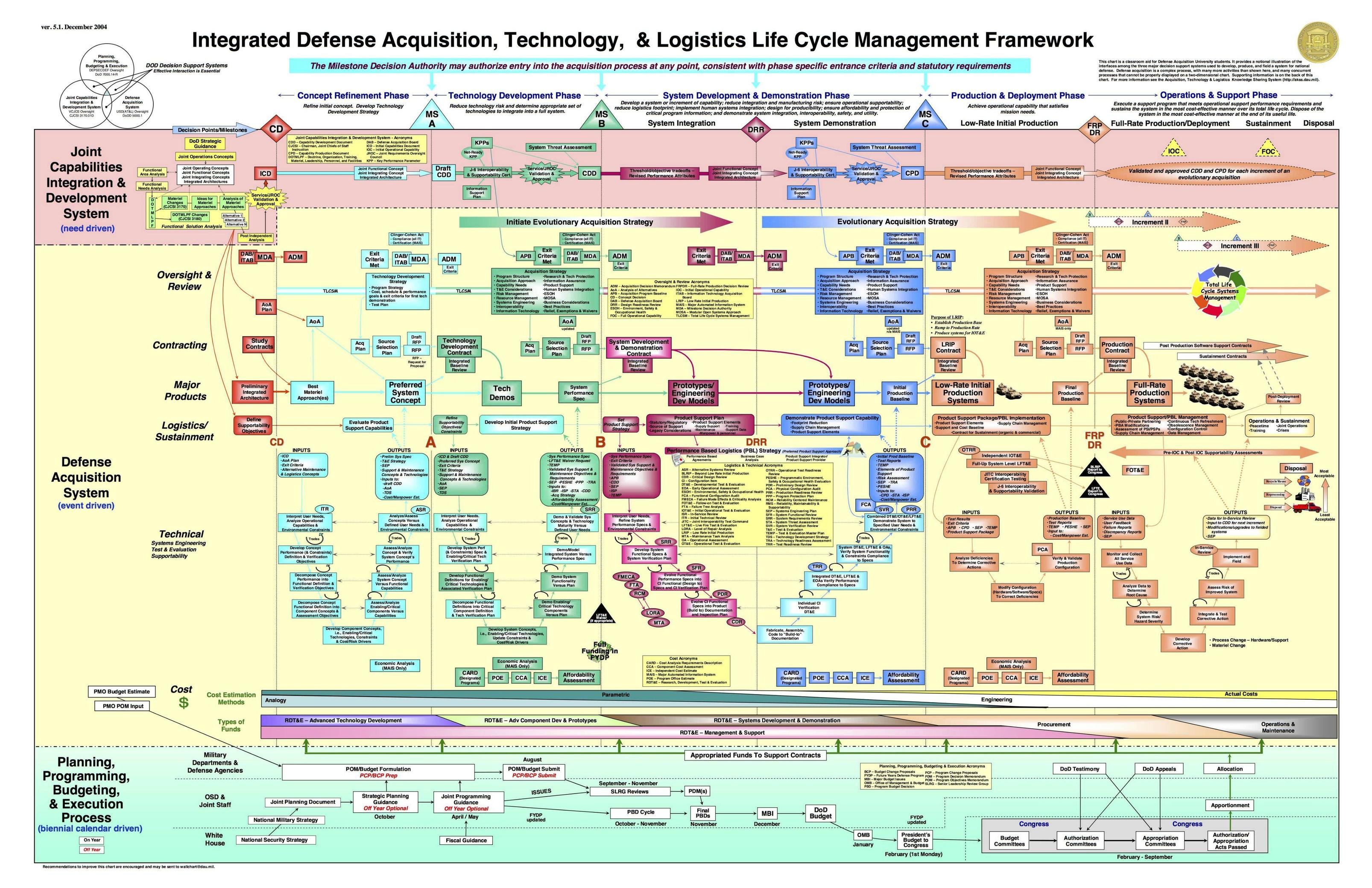
The “Rapid Acquisition Marketplace” model developed by the ARI seems promote faster innovation and a more meritocratic system.
When we begin to take a closer look at the start ups that make it through this process, the picture shifts somewhat.
Air Space Intelligence, one of many “startups”, has a leadership team that has three former Palantir employees, one former Head of Engineering at Anduril, a retired Lieutenant General, and the former Deputy Chief of Staff at the FBI. It also has received tens of millions in funding from giant investors such as Andreessen Horowitz. Yet this is still a “startup” that needs to dodge a lengthy regulation process to get its foot in the door of the defense contracting world.
Other companies that have been approved by the Applied Research Institute also have high profile leadership. Gambit AI, a defense AI contractor much in the vein of Maven Smart Systems, lists former National Security Advisor H.R. McMaster and former US Special Operations Command Executive Jim Smith as the leadership team. Another company called Govini, listed as Poplicus, also has former Chief of Staff for Global Strategic Affairs in the Office of the Secretary of Defense and former Palantir employee Tara Murphy Dougherty as CEO. Twenty LLC, another AI startup, lists Adam Howard, former Staff Director of the House Permanent Select Committee on Intelligence and US Secretary to NATO Parliamentary Assembly as the Vice President of Public Relations for the company. Twenty LLC also lists multiple former intelligence officers on its board such as Leo Olson and Skyler Onken. One company, C3AI, even lists former Secretary of State Condoleezza Rice as a member of the board of directors.

Among these “startups” are also giant corporations. Palantir, Booz Allen Hamilton, IBM, and SAIC are each massive contractors with sometimes decades of military collaboration, and each passed through the Tradewinds Marketplace.
These companies, large and small, are chock-full of high profile defense contractors or former intelligence/military officers, so why do they need assistance in navigating the defense contracting world?
While there is no doubt that the contracting process can present a problem of slowing innovation, by and large the companies that pass through these “rapid acquisition marketplaces” are either established billion dollar companies, or are heavily tied to the defense establishment through their executives and funding. The Applied Research Institute instead functions here as a method to reduce accountability and create an opaque system of public private partnerships to the advantage of private companies.
The funding and accountability come from the public portion, while the private reaps a regulation dodge and a faster turnover time for their products.
This opaqueness reduces public scrutiny onto the awarded companies as well. When products pass through so many money channels it becomes difficult to determine when a contract is handed out, and to whom.
Other countries have been hesitant to work with the type of startup that the Applied Research Institute approves. Switzerland recently declined to contract Palantir for multiple government agencies for fears that Swiss data would be “accessed by the US government and intelligence services.” This fear is not unfounded either. Much of Palantir’s initial funding came from the CIA via another public private partnership, In-Q-Tel.
In-Q-Tel operates similarly to the Applied Research Institute to bolster defense companies, however, instead of setting up a marketplace, In-Q-Tel directly invests CIA money into “startups”, many of which have gone on to be approved by the ARI.
Among these are Twenty LLC, Rune Technologies, and Palantir, each of which have employed intelligence officers or were founded by intelligence officers. Each has received money or contracts via two separate public-private partnerships in the name of innovation.
The fact is that many behind the seemingly plucky startups are the same people involved in intelligence agencies and associated public-private partnerships.
These public-private partnerships exist not to discover new innovations, but rather channel money and contracts within a network of venture capitalists, intelligence officers, and public officials.
The technology that is created by this group of startups, intelligence agencies, and public-private partnerships does not simply stay in the defense world, however, but begins to integrate itself across the economy. This can be seen in how the Department of Health and Human Service has been contracting Palantir since at least 2022, or how the FAA is now looking to Air Space Intelligence and Palantir for AI support for air traffic controllers.
Silicon Valley and the CIA’s new instruments will not just be siloed off into the defense industry, but will increasingly integrate themselves into our everyday lives, the question is, will anyone stop them?
@Michael Burry @Kakashii @bad.robot @Tabitha Zeigler
100% worth reading.
The information contained within is applicable to not only Indiana citizens but Nation wide. This Socialism must stop.